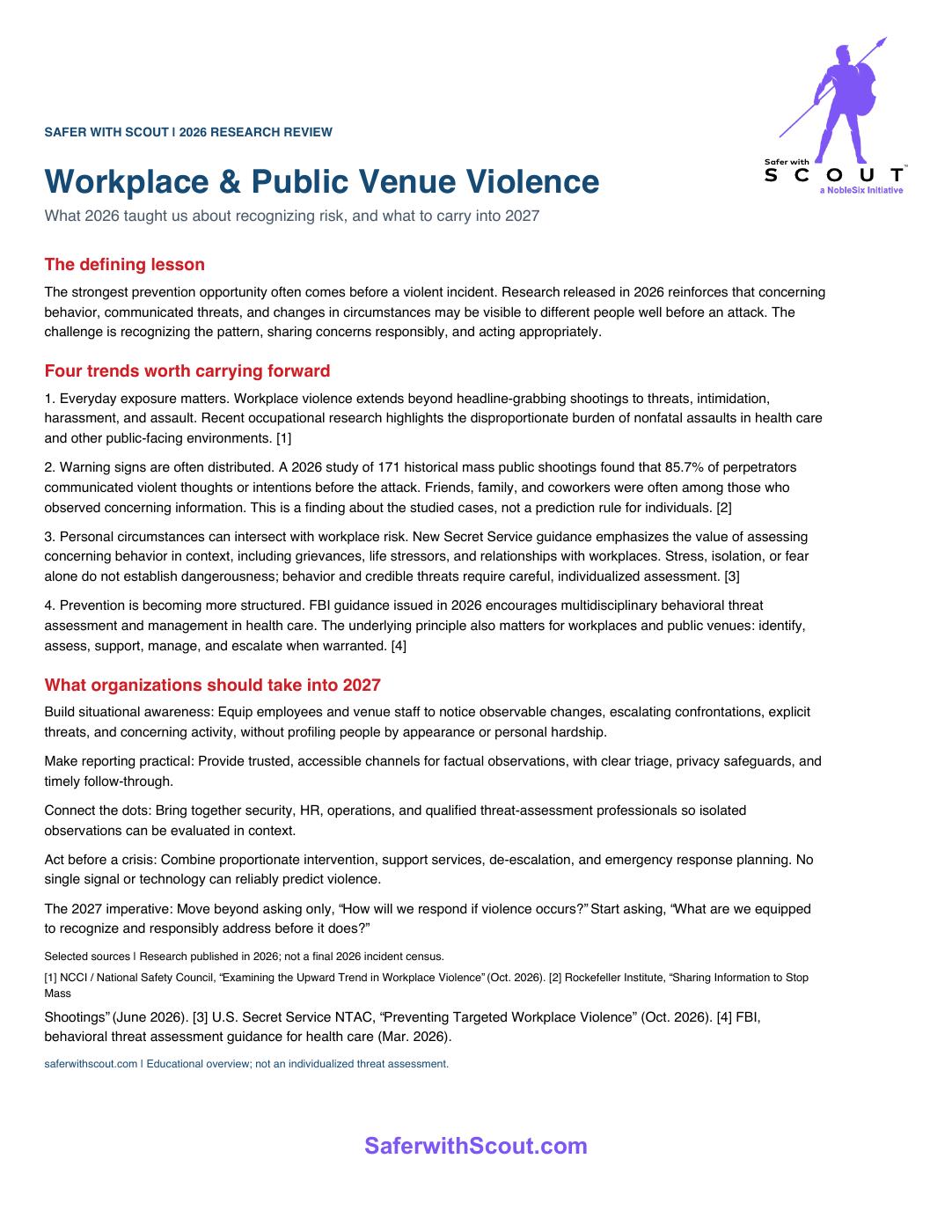
Workplace & Public Venue Violence
What 2026 taught us about recognizing risk, and what to carry into 2027
Executive summary
The strongest prevention opportunity often comes before a violent incident. Research released in 2026 reinforces that concerning behavior, communicated threats, and changes in circumstances may be visible to different people well before an attack. This review brings together findings on everyday exposure, distributed warning signs, personal circumstances, and multidisciplinary threat assessment. Organizations can strengthen prevention through situational awareness, trusted reporting, coordinated assessment, and proportionate intervention. No single signal or technology can reliably predict violence, and personal hardship alone does not establish dangerousness. This is an educational research overview, not a final 2026 incident census or an individualized threat assessment.
Key themes
- Workplace violence includes threats, intimidation, harassment, and assault
- Warning signs may be distributed across friends, family, and coworkers
- Behavior and credible threats require careful, individualized assessment
- Trusted reporting and multidisciplinary assessment help connect the dots
- Proportionate support and intervention can begin before a crisis
Related white papers
Avoidable Risk
Small Changes
Foreseeability Has Changed
The Cost of Silence
Negligence vs. Diligence
Mastering Advanced Situational Awareness
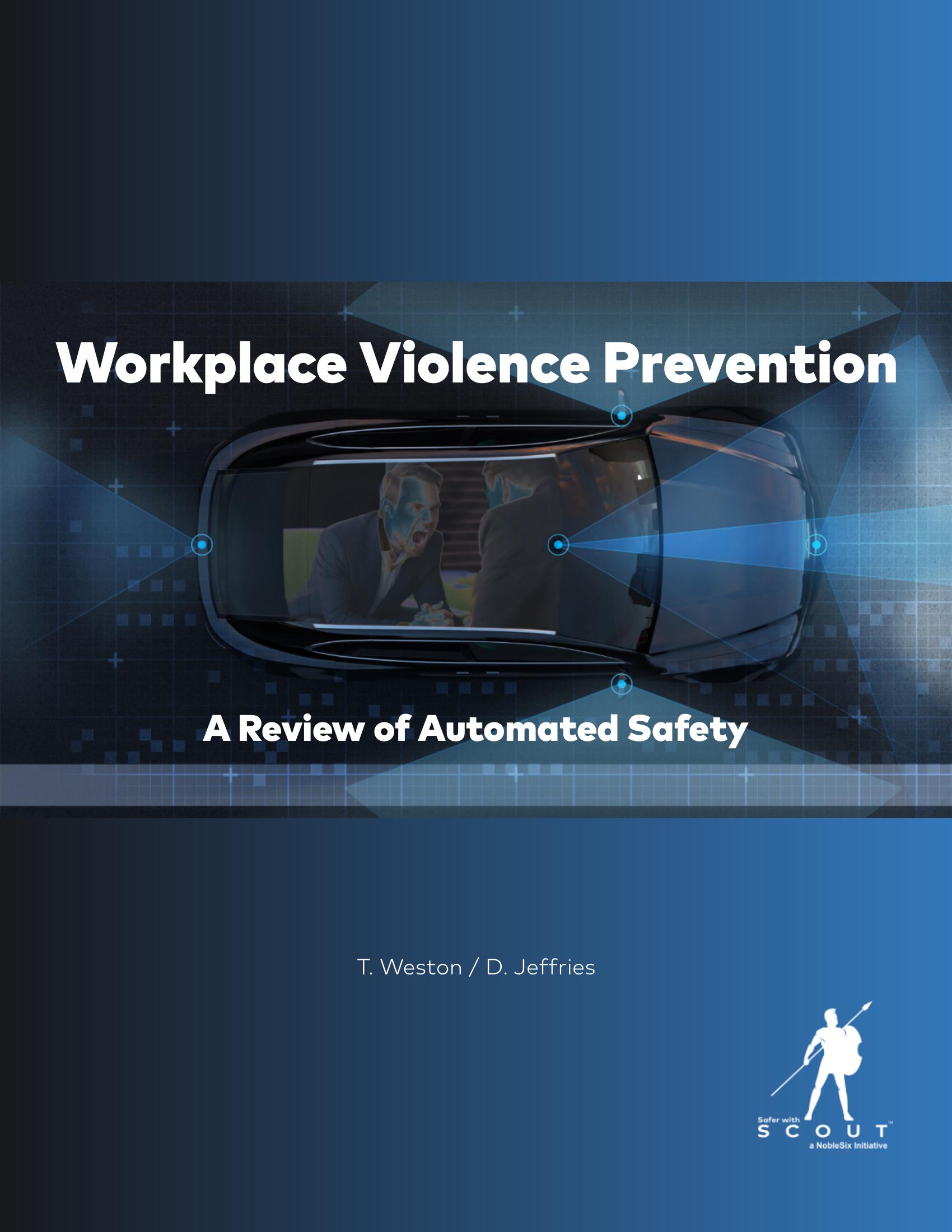
A Review of Automated Safety